
Jesus washing feet painting
A Jesus washing feet painting is a quiet reminder of love that serves. It shows the Lord kneeling, hands on tired feet, close to the ground and close to real life. Many of us pass this scene in the Gospel quickly, but when it hangs on a wall it stays in front of our eyes, inviting us to remember what it looks like when faith bends low instead of standing tall.
Over the years, I have come back again and again to this image. In busy seasons, or when there is tension at home, one look at it softens my heart a little. It does not fix anything by itself, but it helps me pause, breathe, and ask quietly, “How can I serve in this moment?” A simple painting can become a kind of gentle companion in the hallway, the living room, or a small prayer corner.

What a Jesus washing feet painting quietly says
When people talk about religious art, they sometimes think of grand churches, stained glass, or big museum pieces. But a small Jesus washing feet painting hanging in a hallway, bedroom, or office works differently. It does not shout. It simply stays there, reminding us that faith is not only about big moments, but about small acts of care that no one may notice.
In the Gospel of John, this scene of Jesus washing the disciples’ feet comes right before the Last Supper and the Passion. It is a tender, almost awkward moment: God stooping down, taking the place of a servant. Reading the story once a year on Holy Thursday is powerful, but seeing it every day on the wall can gently shape the way we see our family, our coworkers, and even strangers.
I remember the first time I brought a Jesus washing feet painting into our home. I thought it would mostly decorate a blank wall. Instead, it became almost like a question hanging in the room: “Who needs care today?” On days when I felt tired or frustrated, I would catch myself avoiding looking at it, and that alone told me something about my heart.
Over time, that painting did not make me perfect or endlessly patient. But it helped me return, again and again, to the simple idea that love often begins at the lowest place: by listening, by noticing, by doing the small duty right in front of me. The image became a visual version of a short prayer: “Lord, teach me to serve quietly.”
Art like this connects to the long Christian tradition of sacred images. From early house churches to later icons and paintings, believers have used visual reminders to hold the mysteries of the faith close at hand. A Christian art tradition piece like a Jesus washing feet painting stands right in that line, not as decoration only, but as a way of keeping the Gospel present in ordinary spaces.
Placing a Jesus washing feet painting in your home
Every home is different, but certain places seem especially fitting for a Jesus washing feet painting. One common choice is near the entryway. When family members step in and out during the day, they see Jesus kneeling with the towel, and it can quietly set the tone for how they want to enter the house: with patience and kindness, even after a long day.
Others prefer to place it in the dining area, near where the family gathers for meals. There, the image echoes the night of the Last Supper and the service that came just before it. It is not about making every dinner feel like a ceremony, but about remembering that sitting at table together is a gift, and that sometimes the best way to love is to wash the “feet” of the people who live under the same roof: by listening, by helping with dishes, by forgiving small faults.
Some people create a small prayer corner with a crucifix, a candle, and a few holy images. A Jesus washing feet painting can fit beautifully there. Before work, before bed, or during a quiet moment in the afternoon, it can help you enter prayer with a humble heart. A simple glance at the painting can lead into a very short prayer, even just, “Lord, help me serve like You, in the way You want today.”
Personally, I keep my Jesus washing feet painting where I see it while doing small household tasks. Sometimes that means folding laundry while looking up at the image every so often. It reminds me that these hidden chores, done for others, can be a quiet form of love, even when no one thanks you and no one sees.


Using a Jesus washing feet painting in quiet prayer
Many Catholics pray with Scripture using simple images. A Jesus washing feet painting can serve as a doorway into this kind of prayer. You can sit in front of it for a few minutes, breathing slowly, and let the scene sink in. Ask yourself: Where am I in this image today? Am I the one kneeling, trying to serve others without much strength? Am I the one whose feet are being washed, unsure how to receive help?
One gentle way to pray is to imagine Jesus kneeling at your own feet, not because you deserve it, but because that is who He is: the one who comes close, even to the parts of life that feel tired, dusty, or embarrassing. You do not have to feel anything special. Just sit with that thought. Then, when you are ready, you might quietly say, “Lord, teach my heart to be more like Yours,” and leave it at that.
I have found that on difficult days, when I feel I have nothing to give, sitting a few minutes in front of my Jesus washing feet painting is strangely honest. I am reminded that the disciples did not fully understand what was happening either. They were confused and awkward, but Jesus still washed their feet. Remembering that takes away some pressure to have everything figured out before coming to prayer.
Another simple practice is to connect this image with the examination of conscience at the end of the day. You can stand or sit before the painting and quietly look back over the last hours: Where did I serve, even in small ways? Where did I refuse to bend? Where did pride get in the way of love? Then you can ask for mercy and for the grace to begin again tomorrow, with a slightly humbler heart.
Helping children and teens with this image


For children and teens, a Jesus washing feet painting can make the Gospel very concrete. They might not follow long explanations, but they understand pictures. Jesus kneeling on the floor, holding someone’s foot, shows in one glance that faith is not just about being “good,” but about caring for others, even when it is uncomfortable.
You do not have to give a lesson every time you pass by the painting. Often, the most helpful thing is to keep it simple. Now and then, you might pause with your child in front of it and ask, “What do you see?” Let them describe what they notice. Then you can gently add, “This is Jesus showing us how to love: by serving one another.”
Before Holy Thursday, you could read the washing of the feet passage together and then look at the painting. Ask your family which part of the scene surprises them most. Children are often struck that the Lord is the one on the ground, not sitting on a throne. That small discovery can stay with them much longer than a long talk.
In my own home, the Jesus washing feet painting has occasionally started small family conversations after arguments. Once, after a rough afternoon full of complaints and eye-rolling, one of the kids walked by the painting and sighed, “We really didn’t do this today, did we?” It was a simple, humbling moment, and it opened the door to a quiet apology, for all of us.
When a Jesus washing feet painting can be a thoughtful gift
While this kind of painting is not something to push on others, it can be a gentle, meaningful gift in the right situations. For example, a newly married couple building a home may appreciate an image that reminds them what it means to serve one another in daily life. Hung near their dining area or bedroom, it can become a quiet anchor for their first years together.
Another natural moment is a priestly ordination or a diaconate ordination. The washing of the feet is closely connected with service in the Church. Giving a Jesus washing feet painting to someone beginning public ministry can be a simple way of saying, “I am praying that you serve like the Lord did, in hidden, humble ways.”
Teachers, catechists, and volunteers who pour themselves out for others might also receive encouragement from this image. Instead of words of praise, a painting like this speaks of the Lord who sees quiet acts of love that may never be recognized publicly. It is a way of thanking them while also placing the focus back on Christ.
I once gave a Jesus washing feet painting to a friend who worked in healthcare. She spent long hours caring for patients and often felt worn out. She later told me that seeing Jesus kneeling at someone’s feet in her small apartment helped her remember why she chose that path, especially after hard shifts. It did not erase the fatigue, but it gave her a steady reference point.
Choosing style, size, and materials for a Jesus washing feet painting
When you look for a Jesus washing feet painting, you will notice that styles vary widely. Some are very realistic, showing every fold of the towel and every line on the disciples’ faces. Others are more symbolic, with softer lines and fewer details. Think about what helps you pray. Do you connect more with vivid realism, or with something gentler and more suggestive?
Size also matters. A larger canvas can make a strong statement in a living room or parish hall, while a smaller framed print might be better suited for a hallway, office, or bedside table. If you plan to pray in front of it often, choose a size that allows you to see the expressions clearly without straining your eyes.
Materials can shape the mood as well. A canvas print often has a soft, textured look that feels warm and homelike. A framed print with glass can appear a bit more formal and may fit well in an office or study. Some pieces use rich, deep colors that recall traditional church art; others use lighter tones that blend easily with modern decor.
As you consider different options, it may help to imagine the painting in a specific spot. Picture yourself walking past it early in the morning or late at night. Ask yourself: Does this image draw me into silence? Does it make me want to be kinder to the people around me? The right Jesus washing feet painting is the one that quietly leads your heart toward Christ in your particular circumstances.
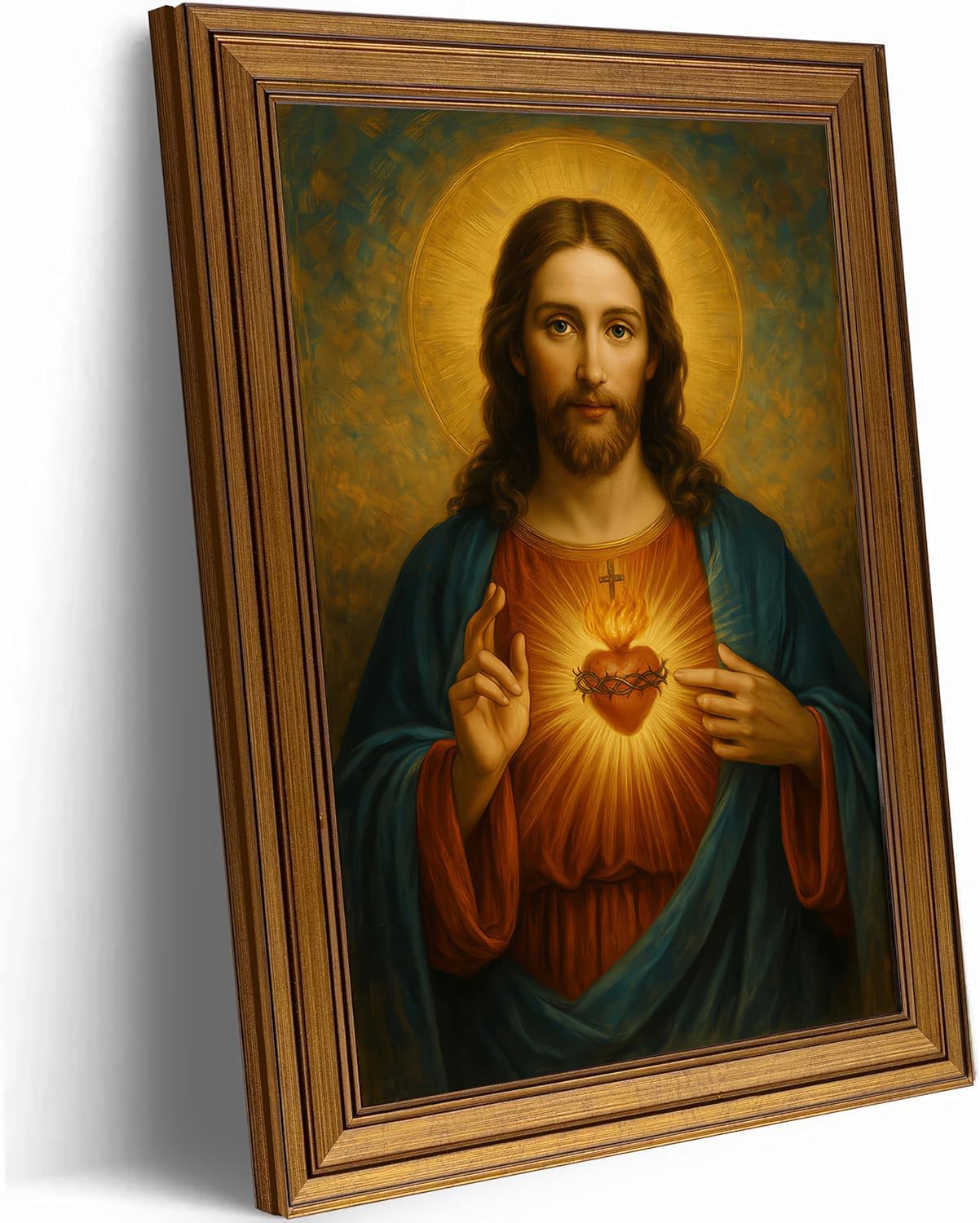

Bringing a Jesus washing feet painting into parish spaces
A Jesus washing feet painting is not only for private homes. Many parishes and ministries find that this image speaks strongly in shared spaces. Near the entrance of a church hall, it can quietly welcome people as they arrive for meetings, Bible studies, or community meals, reminding everyone that they are there to serve one another.
In a reconciliation room or chapel, the painting can help create an atmosphere of humility and mercy. Penitents often come carrying heavy burdens. Seeing Jesus kneeling at the disciples’ feet can suggest, without words, that the Lord comes close to our weakness and does not recoil from our “dusty feet.”
Parish offices, counseling rooms, or places where volunteers gather can also benefit from this image. Staff and volunteers make many hidden sacrifices. A Jesus washing feet painting on the wall can encourage them when they feel unnoticed. It quietly reminds them that they are following the One who chose the lowest place again and again.
I once visited a parish where the only artwork in the meeting room was a single Jesus washing feet painting. It was simple and not very large, but during a long evening meeting, my eyes kept drifting toward it. In moments of disagreement or tension, that painting almost felt like a steady witness in the room, calling everyone—including me—to remember why we were there.
Frequently asked questions about a Jesus washing feet painting
1. Is a Jesus washing feet painting appropriate for any room?
In general, yes. Because this scene is so gentle and humble, it fits well in most rooms: hallways, bedrooms, dining areas, offices, and prayer corners. Many people prefer to place it where they regularly interact with others, such as near the front door or in a family room, since the image points so strongly toward service and everyday love. Some choose to avoid bathrooms or very casual entertainment spaces out of respect, but this depends on the layout of the home and personal sensitivity.
2. How can I pray with a Jesus washing feet painting if I’m not used to praying with images?
You do not need a special method. Start very simply. Sit or stand in front of the painting and look at it for a minute or two. Notice where your eyes are drawn: Jesus’ hands, the disciple’s expression, the water, the towel. Then speak to the Lord in your own words about whatever comes to mind. You might say, “Jesus, thank You for serving me even when I do not notice,” or, “Help me to serve others the way You do.” Short, honest words are enough.
3. Is it respectful to hang a Jesus washing feet painting in a busy area, like near the kitchen?
Yes, it can be very fitting. The Lord chose to wash feet right in the middle of a meal, in the middle of ordinary life. Hanging a Jesus washing feet painting near the kitchen, laundry area, or wherever daily work happens can be a beautiful reminder that those hidden tasks belong to God, too. The key is to treat the image with quiet respect: avoid placing it where it will be easily damaged or where people might be careless around it.
4. What size Jesus washing feet painting works best for a small apartment or dorm?
In a small space, a modest-sized canvas or print often works best—large enough that you can see the expressions clearly from across the room, but not so large that it dominates the entire wall. Many people choose a size similar to a typical framed photo or diploma. If you live in a dorm, you might prefer a lighter, easy-to-hang print that can be removed without damaging the walls. The most important thing is that the painting be visible from where you usually sit or study, so it can gently accompany you through the day.
5. Can a Jesus washing feet painting be a good gift for someone who is struggling?
It can be, if you know the person well and sense that sacred art might comfort them. The image shows a Lord who comes close to our weakness and bends down to care for us. For someone overwhelmed by work, family burdens, or illness, that can be a quiet source of strength. At the same time, it is important to be sensitive. A painting is not a solution to their struggles and should not feel like a message to “try harder.” It is simply a gentle reminder that the Lord is near and that service—both given and received—has deep meaning.
Living with a Jesus washing feet painting over time
Over months and years, a Jesus washing feet painting can slowly become part of the background of your life—in a good way. At first, you might notice it every time you walk past. Later, it simply watches over the ordinary rhythm of your days: early alarms, hurried breakfasts, school drop-offs, long workdays, late-night conversations, and simple family meals.
Every so often, something will happen—a misunderstanding, a moment of anger, a small act of kindness—and the painting will suddenly stand out again. You may find yourself pausing in front of it, maybe just for a few seconds, to gather your thoughts or offer a silent prayer. In those moments, the image does what it is meant to do: it points beyond itself, toward the One who served first.
For me, living with a Jesus washing feet painting has slowly changed the way I see small chores and interruptions. When someone needs help while I am tired or busy, the memory of that image sometimes comes back: Jesus on His knees, towel in hand. I do not always respond perfectly, but the painting has become a quiet invitation I cannot ignore as easily.
If you decide to bring a Jesus washing feet painting into your own space—whether at home, at work, or in a parish—you may find that it gently shapes the way you move through your days. Not by big emotions or dramatic changes, but by steady reminders that real love often happens on the floor, with a towel and a basin, in the very ordinary corners of life.
