
Jesus on the Cross painting
A quiet image of Christ on the Cross can gently shape the atmosphere of a home. This page reflects on how a Jesus on the Cross painting can support simple, everyday prayer, and offers some concrete ways to place and use it with reverence in ordinary Catholic life.
Many of us grew up with a crucifix or a Jesus on the Cross painting hanging in our homes. It might have been over the dining table, in the hallway, or above a bed. We passed it countless times a day, often without thinking much about it, yet it quietly reminded us that our lives are held within something larger than our own worries.
A Jesus on the Cross painting is not simply decoration. It is a way of keeping the memory of the Lord’s sacrifice present in the places where we actually live, work, and rest. For many Catholics, this image becomes a kind of gentle invitation: to pause, to remember, to speak to Jesus in our own words, even if only for a moment.
I remember when my wife and I first hung a Jesus on the Cross painting in our living room. It was nothing extravagant, just a simple, respectful image. At first, it felt like any other picture on the wall. But over time, we noticed that when life felt heavy—after a difficult day at work, or when a family concern weighed on our hearts—we would almost instinctively glance toward that painting. We did not expect answers or sudden changes, but it helped us bring those burdens into prayer, quietly, right where we were.

What a Jesus on the Cross painting can mean at home
In an American home, life can easily become noisy and rushed. Emails, notifications, and schedules can fill every moment. A Jesus on the Cross painting does not solve these things, but it can quietly shift the tone of a room. It reminds us that self-giving love, mercy, and forgiveness are not just church words; they are meant to touch the way we speak to our spouse, our children, our parents, and our neighbors.
When you place an image of Christ crucified in your home, you are choosing to remember His presence in very ordinary moments—when you cook dinner, fold laundry, pay bills, or sit down in the evening. Even if you do not stop to say a formal prayer every time you see it, the image can become like a gentle background note, a quiet “You are not alone” in the middle of regular life.
Over the years, I have noticed that guests sometimes pause in front of our Jesus on the Cross painting. Some simply look, some say nothing, and some share a memory of their own faith. The painting has sparked small, sincere conversations about suffering, hope, and family, without anyone feeling pressured or uncomfortable. It simply opens a door.
For children, a visible image of Jesus can be especially meaningful. It gives them a concrete place to point when they first learn to pray: “Goodnight, Jesus,” “Please help Grandma,” “Thank You for today.” The painting becomes a kind of anchor for their first simple prayers.
Choosing a Jesus on the Cross painting with reverence
When Catholics look for a Jesus on the Cross painting, we usually think about more than colors and style. We ask whether the image draws our hearts toward reverence and quiet reflection. There is no single “right” artistic style, but there are a few aspects that many people find helpful to consider.
1. Expression and posture of Christ
Some paintings show Christ’s suffering in a very intense way, with vivid details and strong emotion. Others show a gentler expression, still clearly on the Cross, but with a calmer or more peaceful face. This choice really depends on what helps you personally to pray.
- More dramatic images may help some people remember the cost of love and the depth of Christ’s sacrifice.
- Milder, more serene images may help others stay with the Cross without feeling overwhelmed, especially in small spaces like bedrooms.
When we were younger, my wife and I had a very dramatic crucifix image in our small apartment. Over time, we felt it might be a bit strong for our children at bedtime. Later, we chose a Jesus on the Cross painting with softer tones and a more peaceful expression. It still spoke clearly of the Cross but fit the atmosphere of our family corner better.
2. Colors and overall tone
The colors of a painting can shape how you experience it during prayer. Warm, earth-toned images can give a sense of humility and closeness. Rich, deep colors may draw you into a more solemn mood. Lighter backgrounds can make the image blend more gently with modern home décor while still being clearly sacred.
Consider the lighting in the room where you plan to place the painting. Will it be near a window with bright natural light, or in a hallway with softer lamps? A painting that looks rich and deep in daylight may feel quite different at night. It can help to imagine how it will look at the times you are most likely to pray there—early morning, after dinner, or late at night.
3. Size and placement
Size also matters in a practical way. A large, bold Jesus on the Cross painting might be fitting above a couch or in a prayer corner where it is meant to be the main focus. A smaller piece may work better near a bedside, a desk, or a quiet hallway.
- Smaller sizes can invite personal, close-up prayer, like a friend you approach quietly.
- Larger sizes can gently “preside” over family gatherings or shared spaces.
Sometimes, people feel uncertain about placing a crucifix image in certain rooms, like the kitchen or office. In my experience, if your intention is respectful, almost any room can be a place of prayer. I once kept a small Jesus on the Cross painting near my home workspace. When a tough email or decision came up, I would look up, take a breath, and try to handle it with more patience and honesty.
Different styles of Jesus on the Cross paintings
Looking at various styles of Jesus on the Cross paintings can help you discern what speaks best to your heart and to the atmosphere of your home. Below are some common approaches you might encounter when exploring options online.




Traditional and realistic styles
Traditional Jesus on the Cross paintings often emphasize realism: clear details of the Cross, the wounds, the crown of thorns, and the surrounding scene. These can be especially meaningful for Catholics who grew up with similar images in church or at home. They connect us to the way generations before us have prayed and remembered Christ’s sacrifice.
Contemporary and simplified styles
Some modern paintings use cleaner lines, fewer details, or more abstract backgrounds. The figure of Christ remains central, but the overall look may blend more naturally into a contemporary home. For some people, this simpler style makes it easier to rest in silence before the image without being distracted by too many details.
Canvas prints and multi-panel layouts
Today, many Jesus on the Cross paintings are available as canvas prints or multi-panel sets. While the format can look modern, the heart of it remains the same: an image that calls the mind and heart to the mystery of the Cross. Multi-panel versions can work well above a couch or in a larger room where a single small frame might get lost on the wall.
I once visited a friend who had a three-panel Jesus on the Cross painting above his family’s prayer table. At first, I was unsure about the modern layout. But as we prayed evening prayers together, I noticed how the image still drew everyone’s eyes upward and centered their attention. The style was different from what I grew up with, yet the reverence was the same.
How to place a Jesus on the Cross painting for daily prayer
Placing a Jesus on the Cross painting thoughtfully can gently foster daily prayer, even when time is short. It does not need to be complicated or formal. Often, small and simple choices are the most sustainable in the long run.
Creating a simple prayer corner
Many Catholic families find it helpful to set up a small corner of the home as a place of prayer. A Jesus on the Cross painting can be the heart of that space. You might place it on the wall above a small table or shelf that holds a Bible, a rosary, and perhaps a candle (used safely and attentively).
- Keep the space uncluttered so the painting remains the focus.
- Add a comfortable chair or spot on the floor where you can sit quietly.
- Let children place simple drawings or intentions near the painting if that helps them pray.
In our home, we have a modest shelf under our Jesus on the Cross painting. On it sit a family Bible, a small dish for written prayer intentions, and a rosary. There is nothing remarkable about it, but knowing that this is our “prayer corner” makes it easier to pause there at the start or end of the day.
Using the painting in family routines
A Jesus on the Cross painting can also find a place in daily family routines without needing many words. Here are a few gentle ways some families incorporate it:
- Glancing toward the painting and making a simple sign of the cross before leaving the house.
- Pausing together for a short prayer in front of it when someone in the family is going through a hard time.
- Standing or sitting near it during evening prayers, the Rosary, or quiet reflection.
I have found that even on evenings when I am too tired for many words, simply standing or sitting in front of the Jesus on the Cross painting for a moment helps me remember that my day, with all its failures and small efforts, can be placed into the Lord’s hands.
Respectful care and handling
Because a Jesus on the Cross painting is a sacred image, it deserves gentle care. When hanging or moving it, it can be helpful to take a moment to pray quietly, asking that your home be a place where Christ’s love is remembered and lived out. If the painting gathers dust or needs to be cleaned, handling it thoughtfully can itself become a small act of devotion.
Personal experiences with a Jesus on the Cross painting
Over the years, the Jesus on the Cross painting in our home has accompanied our family through many seasons: joyful ones like baptisms and graduations, and hard ones like illness and grief. It has been there in the background during late-night feedings, anxious phone calls, and long stretches of ordinary, uneventful days.
I remember one particular evening when a close relative was in the hospital. I could not be there in person, and the helplessness felt heavy. I found myself standing in front of the painting, not knowing what to say. Eventually, I simply said, “You know.” That was the whole prayer. Somehow, looking at Jesus on the Cross made it easier to trust that even what I could not explain was seen and held.
Another time, one of our children asked, while pointing to the painting, “Why does He look so tired?” It opened a very simple conversation about how love sometimes means staying with someone in their pain. We did not give a full theological explanation; we just spoke as parents trying to help a child understand that Jesus chose to be close to us in everything, even in suffering.
These moments remind me that a Jesus on the Cross painting is not magic and does not replace the sacraments or the life of the Church. But it can walk alongside us, quietly, over many years, offering a place to turn our eyes when words run out or when we simply want to say “thank you” at the end of the day.
Additional Jesus on the Cross painting variations
When exploring options online, you may notice subtle variations in background, framing, and lighting that can change how a Jesus on the Cross painting feels in a room. Some pieces include soft rays of light, clouds, or a muted landscape behind the Cross. Others keep the background very simple so that Christ remains the sole focus.
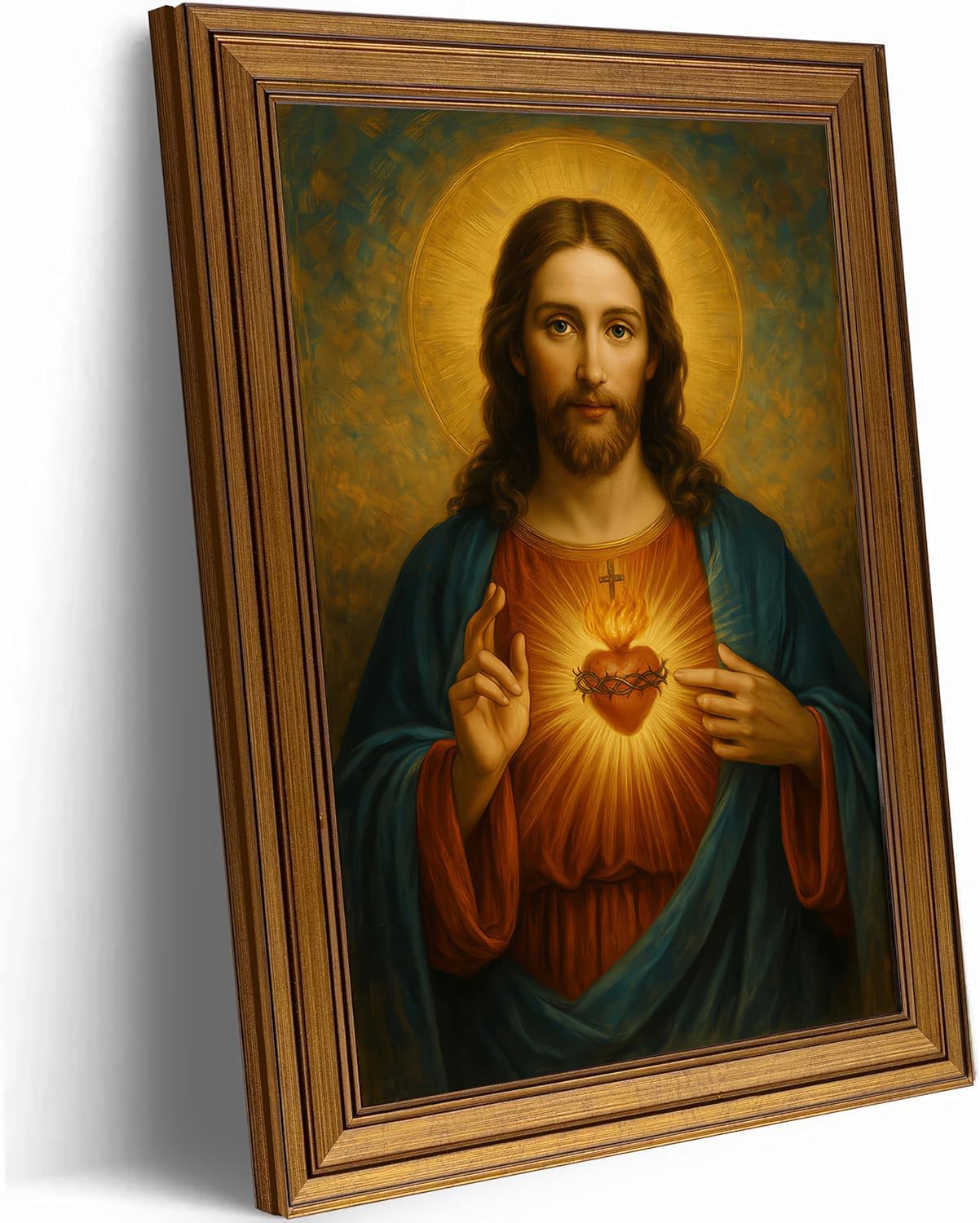
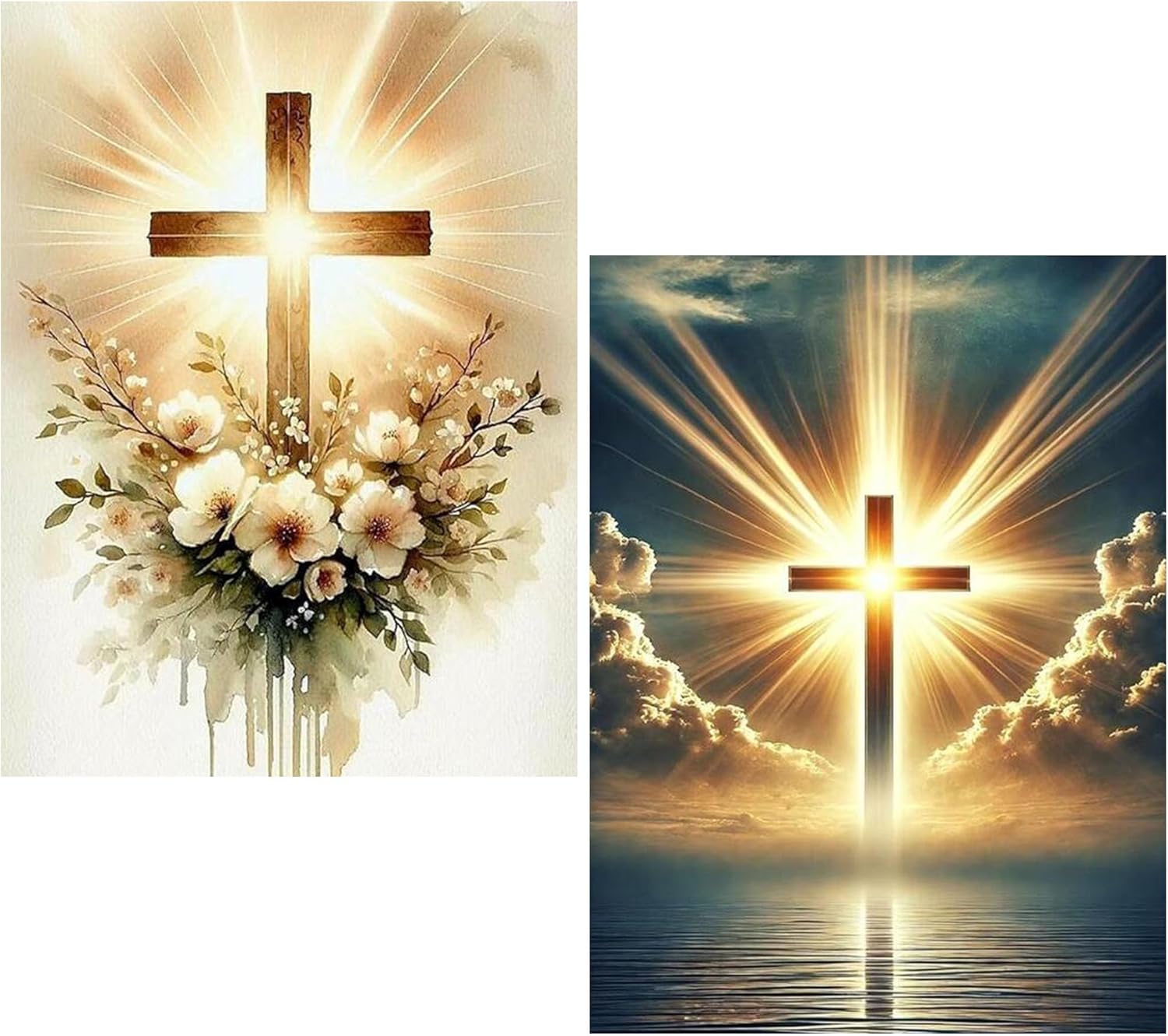

Whether framed or on canvas, bright or muted, the heart of each of these pieces is the same: the image of Christ offering Himself in love. When you look at different versions, you might simply notice which one invites you to pause, to breathe more slowly, and to turn your thoughts toward God. That quiet attraction can be a good sign that the painting is suited to you and your home.