
For many of us, the image of Christ on the cross is the heart of our faith. A Jesus Crucifixion painting on the wall is not decoration in the usual sense. It is a gentle way of saying, even without words, “Lord, You are welcome here.” When we pass by it in the hallway, glance at it while washing dishes, or sit near it during a quiet moment at night, the image can help us remember that we are not alone, even in heavy or confusing days.

This page contains affiliate links. If you click and buy, I may earn a commission at no extra cost to you.
When I first chose a Jesus Crucifixion painting for my own home, I did not think of it as a big spiritual decision. I just felt that something was missing in our living room, something that spoke to who we were as a family. I remember holding the frame in my hands and realizing that this would hang above the spot where we often sat together in the evening. Over time, it quietly became the place I turned my eyes when I felt overwhelmed or grateful or simply tired.
Why a Jesus Crucifixion painting belongs in everyday life
In many Catholic homes, a crucifix or a sacred image is simply part of the house, like the dining table or the bookshelves. It is not there to impress anyone. It is there to keep our hearts gently turned toward God in the middle of ordinary routines: making lunches, paying bills, or getting kids ready for bed.
A Jesus Crucifixion painting can support this in a particular way. The stillness of the image invites us to pause. The suffering of Christ reminds us that He entered our own suffering. The open arms on the cross remind us of mercy. None of this has to be put into perfect words. It is enough just to look up for a moment and remember that His love is real, even when we do not feel especially holy or prayerful.
I have noticed that guests sometimes fall quiet for a second when they see the painting on our wall. No one usually comments on it directly, but there can be a shared, unspoken understanding: this is a home that tries, in its small and imperfect way, to lean on Christ.
Placing a Crucifixion painting in your home
Where you place a Jesus Crucifixion painting matters more than the size or style. It helps to choose a spot that you naturally walk past or sit near each day. Many Catholics like to hang it:
- Above a prayer corner with a small table, Bible, and candle
- In the living room where the family gathers most often
- Near the front door as a blessing when entering or leaving
- In a bedroom, opposite the bed, for quiet nighttime prayer
In my own home, the Jesus Crucifixion painting hangs near the dining table. It is not huge, and it is not the fanciest piece of art, but it has become part of our daily rhythm. Before meals, especially on busy weeknights, that simple glance toward the image helps us remember to say grace with a little more attention.
Creating a simple prayer corner
Many Catholic families, even in small apartments, set up a simple prayer corner. A Jesus Crucifixion painting can be the natural center of that space. You do not need a special room or expensive items. A small table or shelf, the painting on the wall above it, and maybe a candle or a small statue are enough.
Over time, this little corner can become a place where you:
- Pray a decade of the Rosary in the evening
- Read a short passage of Scripture in the morning
- Sit quietly when the day has been heavy and you need to breathe
- Place written intentions or photos of loved ones under the painting
I remember one Lent when I started the habit of sitting under the painting with a cup of coffee for just five minutes before everyone else woke up. I did not say many words. I mostly sat there, looking at Christ on the cross, telling Him silently what was on my heart. Those five minutes did not solve everything, but they anchored my days in a different way.
Noticing the details: color, light, and expression
When choosing a Jesus Crucifixion painting, Catholics often pay attention to very simple things: the expression on Christ’s face, the use of light and shadow, and the overall mood of the scene. Some paintings are very intense, focused heavily on suffering. Others are calmer, emphasizing the love that pours out from the cross more than the pain itself.
There is no “right” style. It can help to ask yourself one quiet question: “Can I imagine praying in front of this every day?” If the answer is yes, even in a small way, that may be enough. Sometimes a painting grows on us slowly, as we live with it and begin to notice details we had first overlooked.

One of the paintings I lived with for a while had a very soft background, almost like mist, with a gentle light falling on Christ’s face. At first I thought it was too quiet, not dramatic enough. But after a few months, I realized that the softness helped me approach the cross with less fear. It reminded me that even in the heaviest moments, there is a kind of quiet hope hidden within the suffering.
Using a Jesus Crucifixion painting for personal prayer
Catholics do not pray to the painting itself. Instead, the image points our hearts toward the real Christ, who is alive and present. A Jesus Crucifixion painting can serve as a doorway into prayer, especially when words feel hard to find.
Some simple ways to pray in front of the painting include:
- Sitting in silence and simply looking at Christ on the cross
- Praying the Stations of the Cross, pausing before the image between each station
- Whispering a short prayer like “Jesus, I trust in You” or “Lord, remember me”
- Bringing to mind someone who is suffering and silently placing them at the foot of the cross
During one particularly difficult year in my family, I found myself standing in front of the painting late at night after everyone had gone to bed. I did not have the energy for long prayers. I simply looked at Christ and said, “You see all of this. Please stay with us.” That simple gaze felt like a prayer, and the painting helped me stay there a little longer than I might have otherwise.

Family prayer and gentle conversations with children
A Crucifixion image can sometimes feel intense for children, but it can also open small, honest conversations about love, sacrifice, and hope. When the Jesus Crucifixion painting is part of the home, children learn, in a natural way, that faith is not just something for Sundays, but something that touches daily life.
With younger children, it can help to speak simply: “This is Jesus showing how much He loves us,” or “Jesus stayed on the cross for us because His love is stronger than anything.” Over time, kids may start to ask their own questions, or they might just quietly notice the image during bedtime prayers.
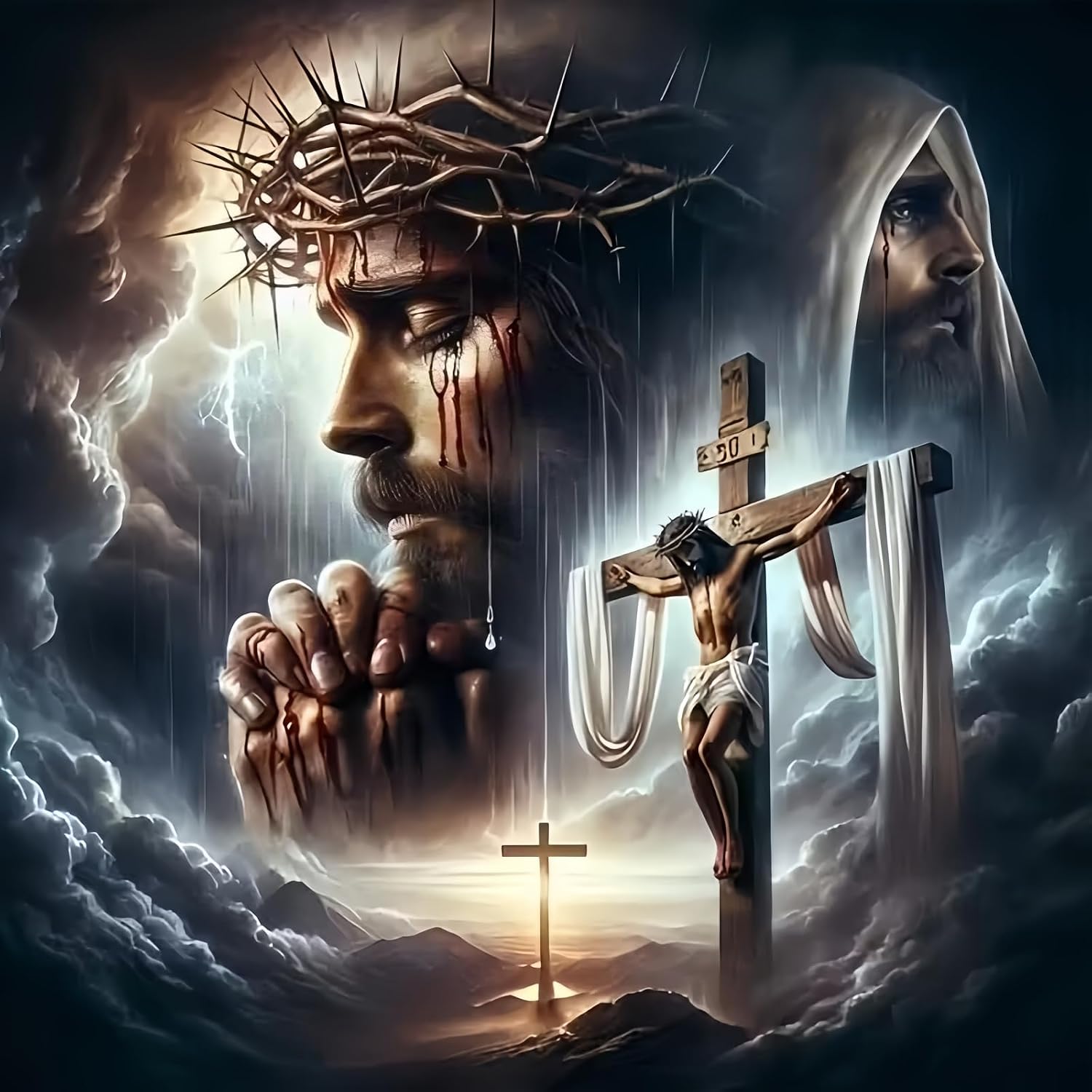
In our family, we have had moments when a child pointed to the Jesus Crucifixion painting and asked, “Why is Jesus on the cross?” Those questions are never easy, but they are holy in their own way. We answer as simply as we can, trusting that God works quietly in their hearts.
Respectful care for sacred images
A Jesus Crucifixion painting is more than décor, so it deserves a certain reverence. This can be expressed in very ordinary ways:
- Hanging it slightly higher on the wall, rather than low to the floor
- Keeping the area around it clean and uncluttered
- Avoiding placing it in places of constant noise, if possible
- Handling the frame gently whenever it must be moved
Over the years, I have moved homes a few times. The Jesus Crucifixion painting is always one of the last items I take down and one of the first I hang up in the new place. There is a sense of relief when I finally see it on the wall again, as if the new house has become a home.

Linking the painting with the liturgical year
Many Catholics find that the meaning of a Jesus Crucifixion painting deepens at certain seasons of the year, especially during Lent, Holy Week, and Good Friday. During those times, it may feel natural to pray in front of the image more often, to sit quietly for a few minutes after coming home from the Good Friday service, or to light a candle near the painting on Holy Thursday night.
Some families place a small purple cloth or a simple branch near the painting during Lent, or a white cloth and flowers during the Easter season. These are simple gestures, but they can help everyone in the household feel connected to the life of the Church.
Art style and tradition
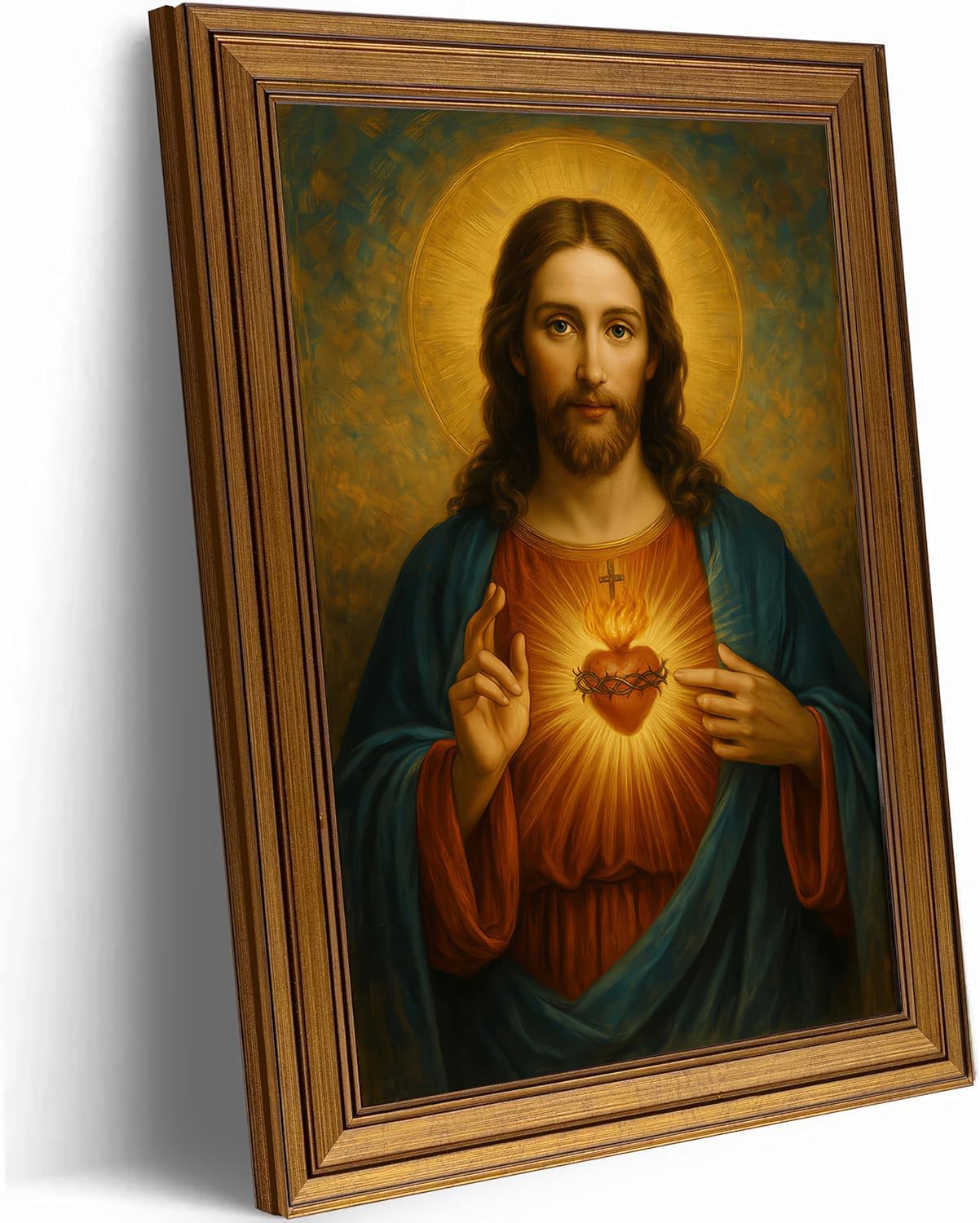
Catholic art has taken many different forms over the centuries. Some Jesus Crucifixion paintings echo older, more traditional styles, with rich colors and clear symbolism. Others have a more modern or minimal look, with softer lines and fewer details. Both can be valid, as long as they help you pray and keep your heart turned toward Christ.
If you are curious about the history behind such images, you might enjoy reading about the tradition of the Crucifixion of Jesus in Christian art, which shows how Christians have tried, in every age, to express the mystery of Christ’s sacrifice through painting and other forms of sacred art.
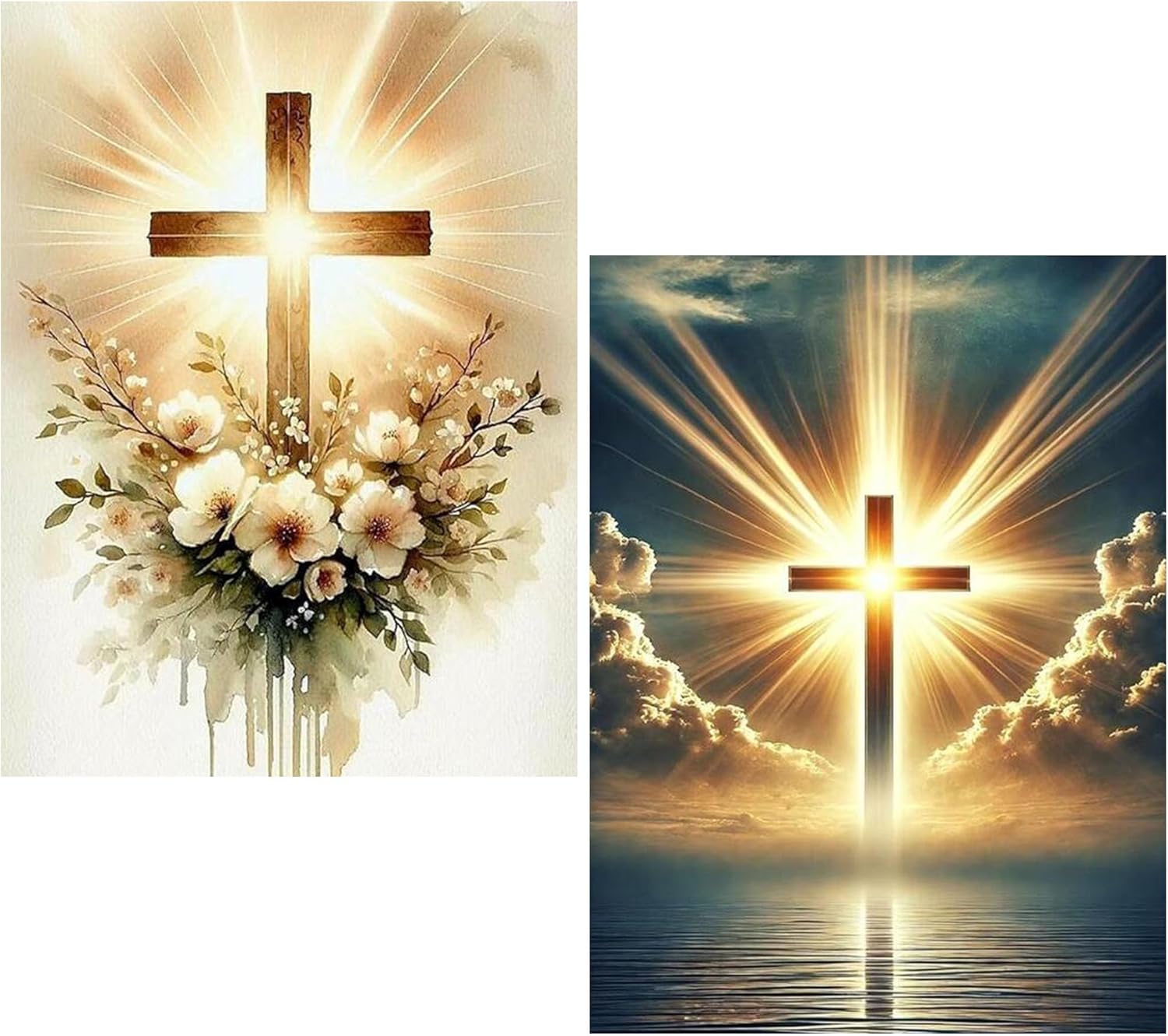
Personally, I tend to be drawn to images where Christ’s face shows both sorrow and peace. Through the years, I have realized that this balance helps me remember that the cross is neither only tragedy nor easy comfort. It is a mystery that holds both suffering and love together.

Over time, a Jesus Crucifixion painting can quietly become part of your story. It may witness joyful celebrations, quiet evenings, and difficult days. It may watch over meals, arguments, reconciliations, and simple moments of rest. Through all of this, it remains what it has always been: a sign that Christ has entered our human life fully, and that His love stays with us.